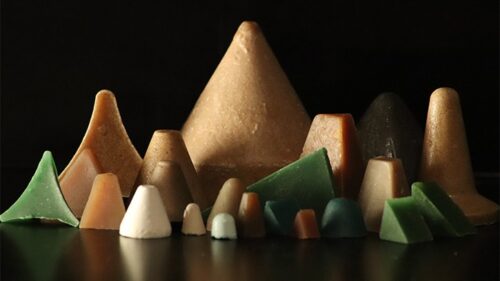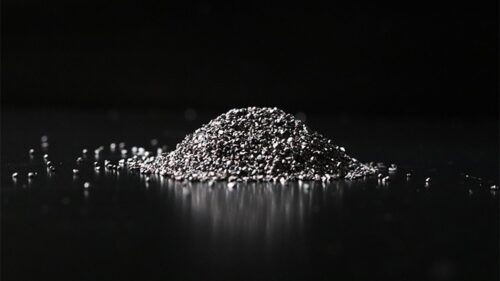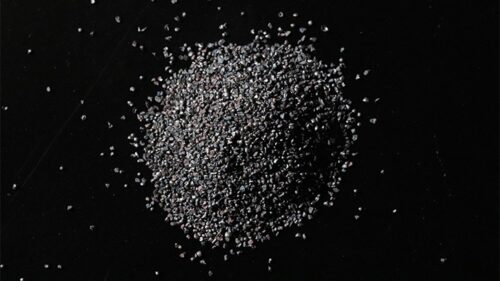

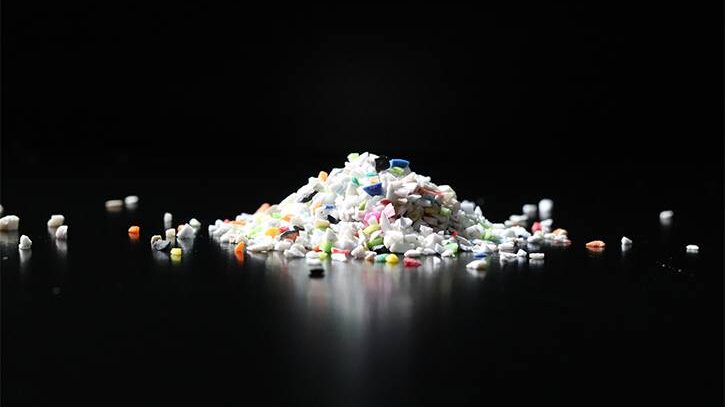
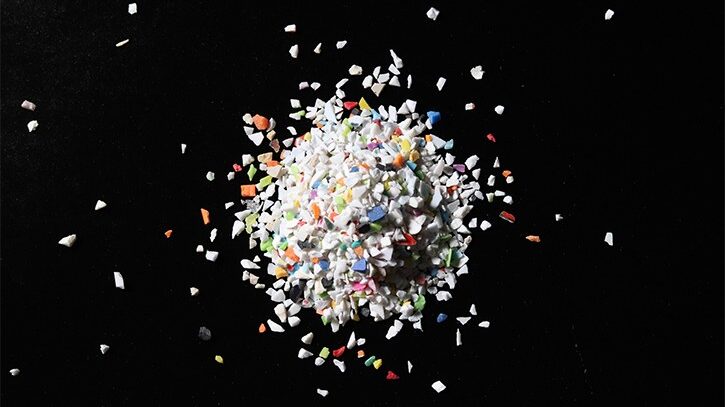
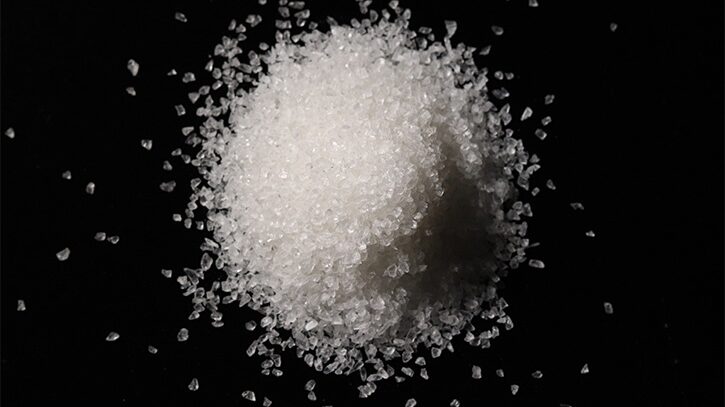
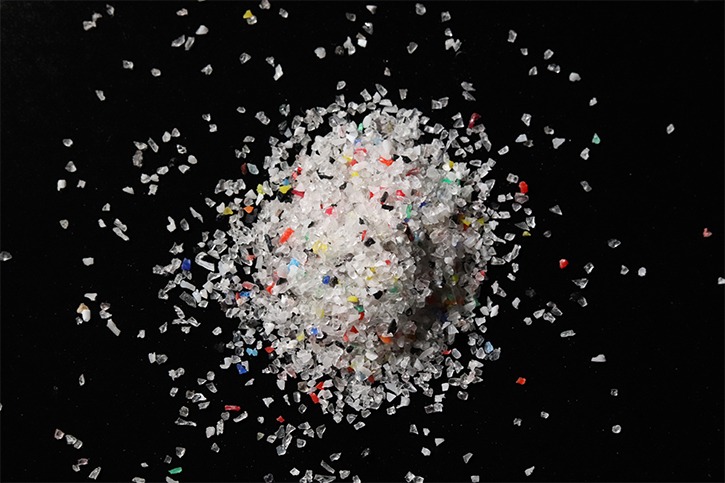

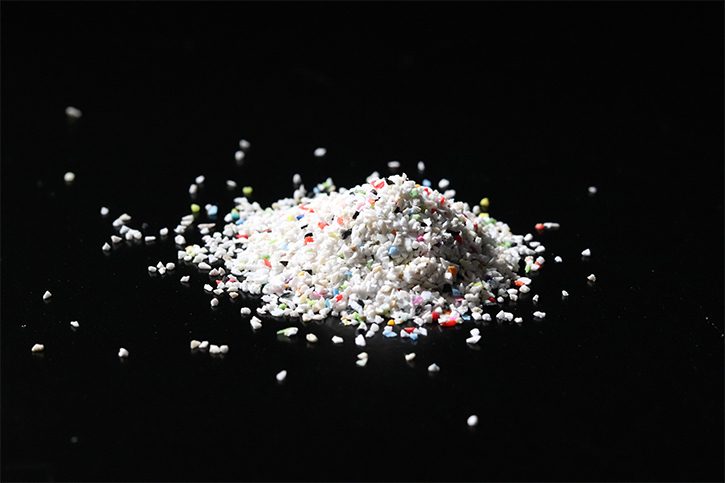
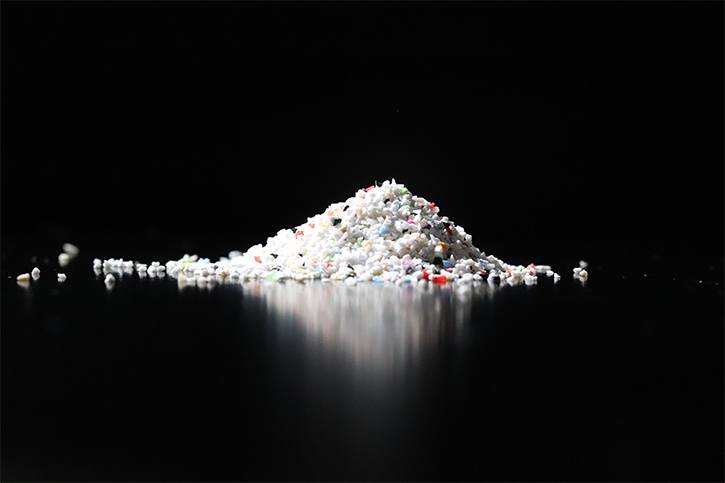
Plastic blasting media is a versatile abrasive media that can be used in a variety of applications. It is a lightweight, angular-shaped media most commonly used in the removal of paint or other coatings without harm to delicate substrates such as aluminum or composites.
Plastic media is created from either recycled plastic products or resin. The most common plastic media types are polyester (type I), urea (type II), melamine (type III), or acrylic (type V). Each type has a different hardness to meet the application need.
Plastic Abrasive Applications:
- Mold cleaning
- Contaminant removal
- Paint or coating stripping, particularly in the aerospace industry
- Deflashing of plastic or rubber parts
- Cleaning of delicate parts
Physical Characteristics:
- Angular or blocky shape
- Hardness:
- Polyester (type I) – approx. 3.0 Mohs
- Urea (type II) – approx. 3.5 Mohs
- Melamine (type III) – approx. 4.0 Mohs
- Acrylic (type V) – approx. 3.5 Mohs
- Light bulk density, lends to high velocity when used in blast equipment
- Available in mixed grits
- Military spec sizing also available
Frequently Asked Questions:
What are the different types of plastic blast media?
Plastic blast media comes in four main types, each with a different hardness level to match the demands of the application. Polyester (Type I) is the softest at approximately 3.0 Mohs, followed by urea (Type II) and acrylic (Type V) at around 3.5 Mohs, and melamine (Type III) at approximately 4.0 Mohs. Each type is made from either recycled plastic or resin and is available in mixed grits. Military spec sizing is also available for applications that require it.
What are the advantages of plastic blast media?
The primary advantage of plastic blast media is its ability to strip coatings and clean surfaces without damaging the underlying substrate. Its lightweight, angular shape produces high velocity impact while keeping the cutting action gentle enough for delicate materials like aluminum, composites, and plastics. It is versatile across a wide range of applications, reusable, and particularly well-regarded in industries like aerospace where protecting the base material during paint stripping is critical.
What are the disadvantages of plastic blast media?
Plastic media is not the right choice for every job. Because it is a softer abrasive, it is not effective on heavily contaminated surfaces or hard substrates that require aggressive cleaning power. It also has a lower bulk density than metallic abrasives, which limits the force of impact for demanding applications. For jobs requiring deep anchor patterns or rapid rust and scale removal, harder media options will outperform plastic.
Which applications use plastic blasting media?
Plastic blast media is most commonly used for paint and coating stripping — particularly in aerospace — where protecting the base material is just as important as removing the coating. Other common applications include mold cleaning, contaminant removal, deflashing of plastic and rubber parts, and cleaning of delicate components where harder abrasives would cause surface damage.
How does plastic media compare to friable media like walnut shells?
Both plastic media and walnut shell are gentle, lightweight abrasives suited for delicate substrates, and walnut shell can serve as a substitute for plastic media in some applications. The key difference is durability and consistency. Plastic media is more durable and delivers more controlled, repeatable results across multiple cycles. Walnut shell is more friable, meaning it breaks down faster — which can actually be an advantage in applications like food equipment cleaning or blasting parts with internal cavities, since any residual media will break down without causing damage. For precision industrial applications, plastic media generally offers better process control.
How does plastic blast media compare to hard media like aluminum oxide?
The difference comes down to aggression and substrate sensitivity. Aluminum oxide is a much harder abrasive — approximately 9.0 Mohs compared to plastic media’s range of 3.0 to 4.0 Mohs — and it is designed for applications that require aggressive cutting, deep surface profiles, and fast material removal on hard substrates like steel, titanium, and ceramics. Plastic media trades that cutting power for substrate protection, making it the right choice when the workpiece cannot tolerate etching or surface removal. If your goal is stripping a coating from aluminum or a composite part without altering the base material, plastic media is the better fit. If you need to create an anchor pattern or remove heavy scale from a hard surface, aluminum oxide is the more appropriate choice.